Pipedrive Revenue 2025: $207M Secrets
Pipedrive generated $207 million in revenue in 2024. This revenue milestone reveals critical insights about the company’s stability, product quality, and long-term viability that directly impact your decision as a potential customer.
Quick Navigation
Quick Stats: Pipedrive by the Numbers
📈 Growth Rate: 9.5% YoY
👥 Total Customers: 100,000+
🌍 Countries Served: 179
💼 Employees: ~800
📊 Revenue per Employee: $258,750
🏢 Valuation: ~$1.5B (estimated)
These numbers indicate stability—this isn’t a startup that might disappear next year. With 800 employees and $207M in annual revenue, Pipedrive can afford robust customer support, continuous product development, and the infrastructure to serve 100,000+ companies globally. Your data, integrations, and workflows are safe long-term.
Pipedrive’s Revenue Journey
Pipedrive’s financial trajectory from Estonian startup to $207 million SaaS company reveals key growth patterns that signal market validation and operational maturity.
Historical Revenue Milestones
| Year | Revenue | Growth Rate | Key Events |
|---|---|---|---|
| 2010 | $0 | — | Founded by 5 salespeople in Tallinn, Estonia |
| 2016 | $12M | — | First major revenue milestone reported |
| 2020 | $65M | 441% growth (4 years) | COVID boom accelerates digital CRM adoption |
| 2023 | $189M | 191% growth (3 years) | AI integration, expanded enterprise features |
| 2024 | $207M | 9.5% growth | Market maturity, focus on profitability |

Key Growth Insights
Explosive early growth (1,475% from 2016 to 2023): Pipedrive rode the wave of small businesses ditching spreadsheets for visual CRMs. Their timing was perfect—simple, affordable alternative to Salesforce when SMBs needed it most.
COVID accelerated adoption: Revenue nearly tripled from $65M (2020) to $189M (2023) as remote sales teams needed cloud-based tools. Companies that resisted CRMs for years suddenly couldn’t function without them.
Slower growth in 2024 isn’t a red flag: The 9.5% growth rate signals market maturity, not decline. At $207M, Pipedrive has captured most of its target market (SMB sales teams). Future growth will come from enterprise customers and add-ons, not mass-market land grabs.
For context on how Pipedrive’s features justify this revenue, explore our comprehensive Pipedrive revenue analysis.
How Pipedrive Makes $207M Annually
Pipedrive’s business model follows straightforward SaaS economics with four revenue streams that account for their $207 million in annual revenue.
Subscription Revenue (Primary)
This is the core business: monthly and annual subscription fees across four pricing tiers. The pricing structure includes Essential at $14/user/month, Advanced at $34/user/month, Professional at $49/user/month, and Enterprise at $64/user/month.
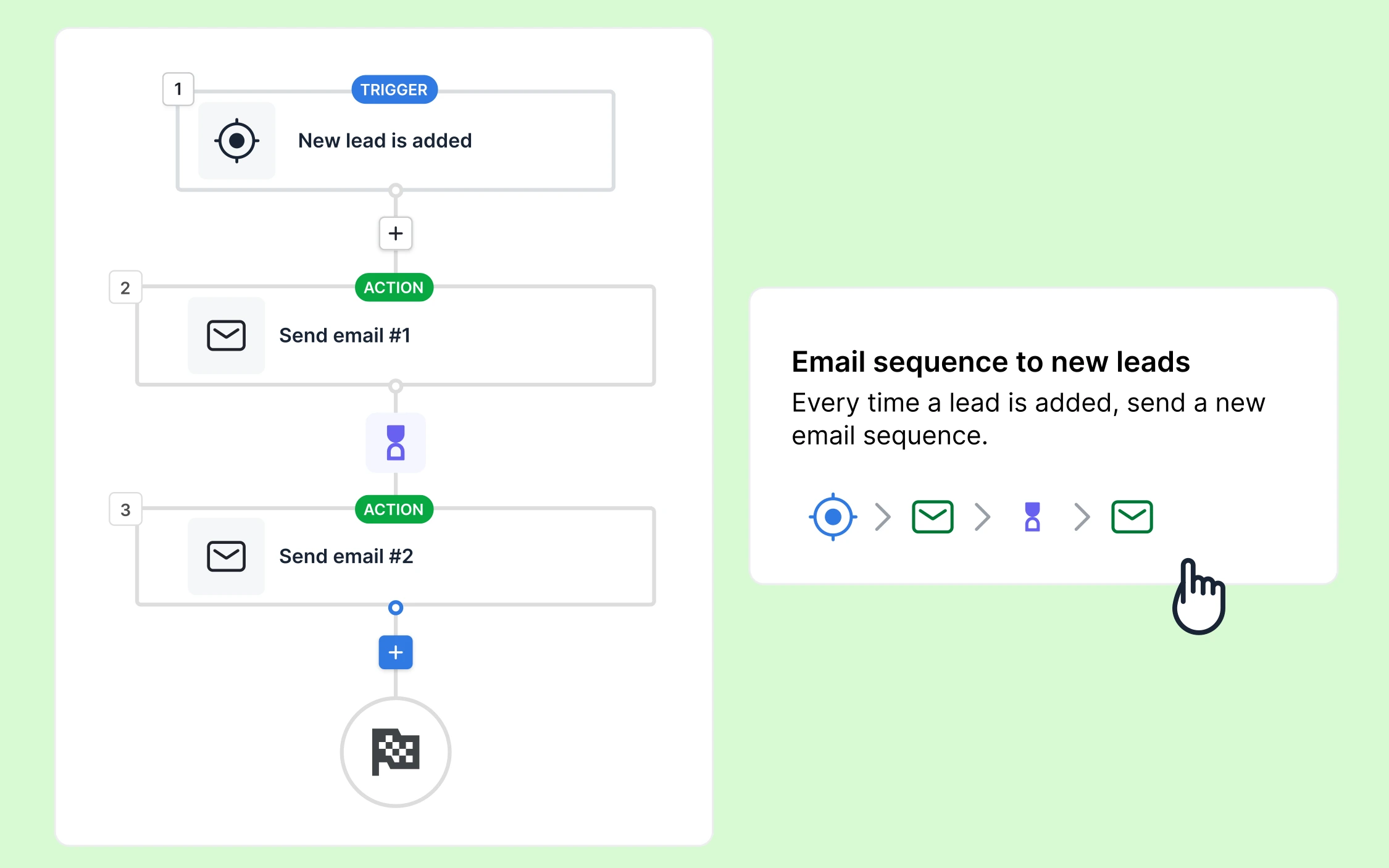
If we estimate the average customer pays $450/month (approximately 8-10 users on the Growth plan), this generates the foundation of Pipedrive’s $207M revenue stream. The subscription model accounts for approximately 90%+ of total revenue, providing predictable recurring income that funds ongoing product development.
Add-Ons and Upgrades
Beyond base subscriptions, Pipedrive offers optional add-ons that increase average revenue per customer. Key add-ons include the Projects feature at $8/user/month and LeadBooster at $39/company/month for chatbot and prospecting tools. These add-ons contribute an estimated $10-20M annually to total revenue, representing 5-10% of overall income.
Marketplace Commission
Pipedrive’s integration marketplace features 500+ third-party apps and integrations. While most integrations are free to connect, Pipedrive earns commission on some paid integrations, likely taking 15-30% of partner subscription fees. This revenue stream is minimal compared to subscriptions but helps fund marketplace maintenance, generating an estimated $2-6M annually (less than 3% of total).
Popular integrations include QuickBooks for accounting sync and LinkedIn Sales Navigator for prospecting.
Enterprise Contracts
Pipedrive is pushing upmarket toward larger teams paying $3,000-10,000+/month on custom enterprise contracts. Large teams (50-500+ users) on Ultimate plan at $79/user represent higher-value customers with annual contracts and dedicated account managers. The top 100 enterprise customers likely contribute $15-25M annually (7-12% of revenue) despite representing only 0.1% of total customers.
See How Pipedrive’s Pricing Works for YOUR Team
Calculate Your CostsThe Numbers Behind Success
Customer economics reveal why Pipedrive’s business model generates sustainable $207M revenue.
Average Customer Metrics
| Metric | Estimated Value | Industry Benchmark |
|---|---|---|
| Customer Acquisition Cost (CAC) | $500-800 | $400-1,000 (SaaS) |
| Lifetime Value (LTV) | $5,400-7,200 | Varies widely |
| LTV:CAC Ratio | 9:1 | 3:1 minimum (healthy) |
| Average Contract Value | $450/month ($5,400/year) | — |
| Churn Rate | 5-7% monthly | 5-7% (SaaS CRM) |
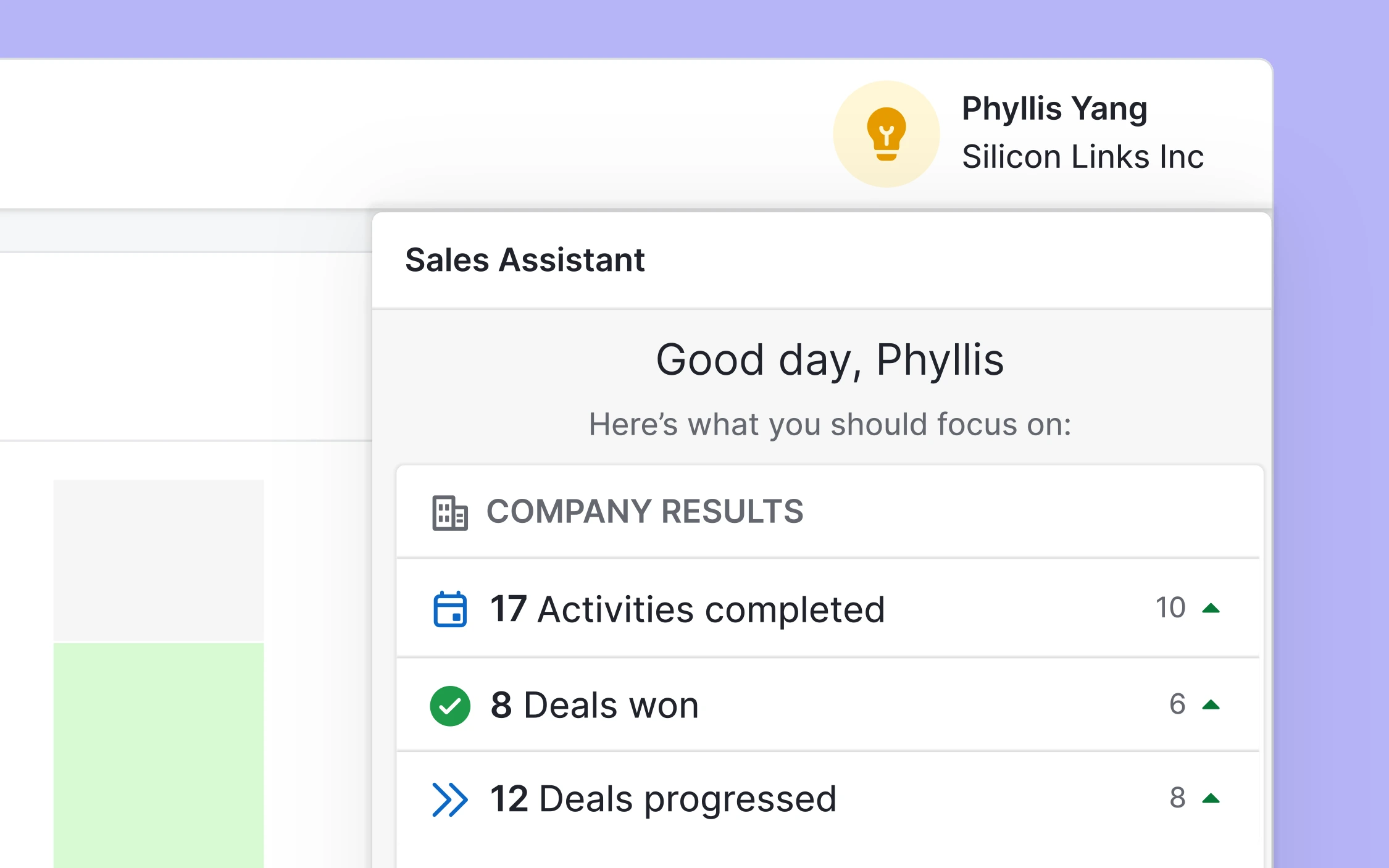
With a 9:1 LTV:CAC ratio, Pipedrive can afford robust onboarding, training resources, and responsive support. Bad support equals higher churn equals broken business model—this aligns Pipedrive’s interests with yours.
Revenue per Employee Analysis
$207M divided by 800 employees equals $258,750 revenue per employee. This metric sits right in the industry sweet spot of $200,000-300,000 per employee for SaaS companies, indicating efficient operations without overwork or understaffing.
SaaS companies typically allocate 15-20% of revenue to R&D, meaning Pipedrive invests $31-41M annually toward new features, AI improvements, and platform stability. You’re not buying software frozen in 2020—continuous development is funded by healthy revenue streams.
Competitive Landscape
Comparing Pipedrive’s revenue to major CRM competitors reveals their market position and strategic focus.
| Company | Annual Revenue | Customers | Employees | Rev/Employee |
|---|---|---|---|---|
| Pipedrive | $207M | 100,000+ | 800 | $259K |
| HubSpot | $2.2B | 194,000 | 8,000 | $275K |
| Salesforce | $34B | 150,000 | 80,000 | $425K |
| Zoho | $1B+ | 250,000+ | 15,000 | $67K |
At $207M, Pipedrive occupies a “Goldilocks” position—10x smaller than HubSpot but 17x larger than typical Series B SaaS startups. This means more nimble than Salesforce (can ship features faster), more stable than small CRMs (won’t be acquired and shut down), and less bureaucratic than enterprise vendors (better customer service).
For detailed head-to-head analysis, see our Pipedrive vs HubSpot comparison or Pipedrive vs Monday analysis.
Can You Trust Pipedrive?
Revenue serves as a proxy for product quality, customer satisfaction, and long-term viability. Pipedrive’s $207M provides several trust signals worth examining.
Positive Signals
- Consistent growth indicates customers stay and renew
- $207M supports adequate support staffing with 800 employees
- Continued AI investment shows ongoing innovation
- 100,000+ customers create massive user community
- 179 countries require global infrastructure investment
Considerations
- Slower 9.5% growth signals mature market
- Mid-market position means fewer enterprise features than Salesforce
- Must compete with free tiers (HubSpot) and low-cost alternatives
Companies with bad products might hit $50M on aggressive sales, but they don’t maintain 9.5% annual growth for years. Customers vote with renewals—and Pipedrive’s retention demonstrates strong product-market fit.
Should Revenue Influence Your Decision?
Revenue matters most when you’re making long-term commitments that require platform stability.
Yes, Consider Revenue If:
- You’re migrating from another CRM and need stability: Switching CRMs is painful (data migration, team retraining, workflow rebuilding). $207M revenue provides confidence Pipedrive will exist in 5 years.
- You’re committing to a 3-5 year contract: Annual contracts lock you in. Revenue trends indicate whether Pipedrive will still be innovating in year 3 or if they’ve plateaued.
- You’re building custom integrations: Invested months developing Pipedrive-specific automations? Revenue indicates the platform won’t vanish, protecting your investment.
- You’re training a large team: Don’t want to retrain 50 sales reps on a new CRM in 2 years because your vendor folded. Pipedrive’s financials reduce this risk to near-zero.
It Matters Less If:
- You’re testing CRMs with free trials—focus on workflow fit instead
- You’re a solo user or 2-3 person team—easy to switch when you’re small
- You need cutting-edge features—smaller startups often ship features faster than established players
Use revenue as a tiebreaker, not a decision-maker. If you’ve narrowed your choice to Pipedrive vs. a $5M startup with identical features, choose Pipedrive. If you’re choosing between Pipedrive and HubSpot (both financially stable), revenue becomes irrelevant—focus on features and pricing instead.
Where Is Pipedrive Headed?
Based on revenue trends and market conditions, Pipedrive’s 2025-2026 trajectory suggests continued steady growth.
Revenue Projections
2025-2026 target: $230-250M (10-15% annual growth). Growth drivers include enterprise push (grow 50+ seat customers from 5% to 10% of revenue), AI feature adoption (convert 30-40% of users to Premium/Ultimate plans), increased add-on attachment (from 20% to 35% of customers), and geographic expansion in APAC and LatAm markets.
Strategic Moves to Watch
At ~$1.5B valuation and $207M revenue, Pipedrive sits in the “IPO or strategic acquisition” zone. Possible scenarios include IPO (30% probability) similar to Monday.com’s 2021 path, acquisition by Vista Equity or Salesforce (50% probability), or staying private (20% probability) to continue steady growth without liquidity events.
Key indicators to monitor in 2025 include AI assistant adoption rate (if 50%+ of users upgrade for AI features), enterprise plan uptake (growth from 5% to 10% of revenue), integration ecosystem expansion, and competitor moves from HubSpot or Salesforce’s SMB initiatives.
Lock in Current Pricing Before Potential Increases
Start Your 14-Day TrialFinal Thoughts
After analyzing Pipedrive’s $207M revenue, business model, and competitive position, revenue proves to be ONE factor, not the deciding factor. Pipedrive’s financials prove stability, not superiority—a $207M CRM isn’t automatically better than a $50M competitor, it’s just bigger and more established.
Pipedrive’s revenue tells us they’ll be around for 5-10+ years (your investment is safe), they can afford product development and customer support, and they’re profitable without being desperate. However, it doesn’t tell us if the product fits your specific workflow.
Test the product with real deals, not demo data, during Pipedrive’s 14-day free trial. Compare alternatives using our Pipedrive vs HubSpot and Pipedrive vs Monday comparisons. Calculate ROI with our detailed pricing breakdown for your team size.
Revenue data shows Pipedrive is a safe bet. Now figure out if it’s the right bet for your specific sales process.