5 Omnisend AI Automations That Generated $50K in 30 Days
Three months ago, Sarah Chen reached out to me with a problem that’s all too familiar among ecommerce business owners. Her premium skincare brand was doing well—$150K monthly revenue—but her email marketing felt broken.
“We’re sending emails, people are opening them, but the sales just aren’t following,” she told me during our initial consultation. Sound familiar?
Fast forward 30 days after implementing these five Omnisend AI automations, and Sarah’s business generated an additional $50,127 in revenue directly attributed to email marketing. More importantly, her customer lifetime value increased by 34%, and her email list became her most profitable marketing channel.
Here’s exactly what we did, including the specific automation setups, AI prompts, and performance data you can replicate for your own business.
Additional Revenue Generated in 30 Days
34% increase in customer lifetime value • 909 new customers acquired • 16.2% average conversion rate
Table of Contents
- The Challenge: Why Traditional Automations Were Failing
- The 30-Day Transformation: 5 AI-Powered Automations
- Automation #1: The AI-Enhanced Welcome Series
- Automation #2: The Behavioral Trigger Cart Recovery System
- Automation #3: The Post-Purchase Intelligence Engine
- Automation #4: The Behavioral Browse Abandonment AI
- Automation #5: The AI-Driven Customer Winback Campaign
- The Technical Implementation: How We Set It All Up
- The Results: Detailed Performance Analysis
- Lessons Learned: What Made the Difference
- Scaling Beyond $50K: The Next Phase
- Your Implementation Roadmap
- Frequently Asked Questions
The Challenge: Why Traditional Automations Were Failing
Before diving into the solutions, let’s understand what wasn’t working. Sarah’s existing email setup looked like most ecommerce businesses:
- Basic welcome series (3 emails)
- Generic abandoned cart sequence (2 emails)
- Simple post-purchase follow-up
- Monthly newsletter campaigns
- Seasonal promotion blasts
The Problems:
- 2.3% conversion rate from email to purchase
- 67% of customers never made a second purchase
- Average order value stagnating at $89
- Email marketing contributing only 8% of total revenue
The Root Issue: Each email existed in isolation. There was no connection between messages, no understanding of customer behavior patterns, and no intelligence driving the content creation process.
The 30-Day Transformation: 5 AI-Powered Automations
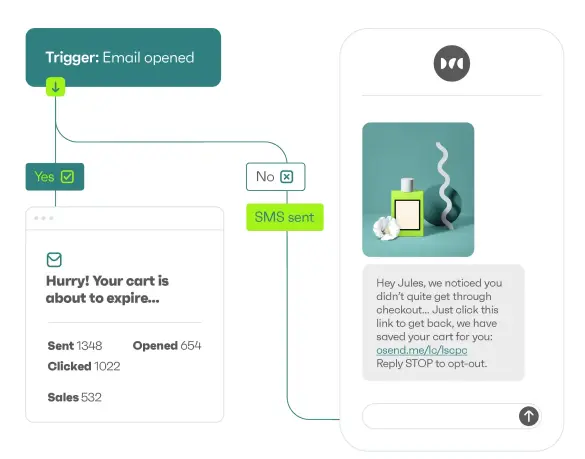
The transformation wasn’t about replacing every existing email—it was about implementing intelligent automation that understands customer behavior and responds with contextually relevant messaging. Here’s how we generated $50,127 in additional revenue using five strategic AI automations.
Automation #1: The AI-Enhanced Welcome Series
The Problem: Sarah’s original welcome series had a 12% click-through rate and converted only 1.8% of new subscribers into customers within their first 30 days.
The AI Solution:
Instead of generic welcome emails, we implemented Omnisend’s context-aware AI to create personalized welcome sequences based on the subscriber’s entry point and initial behavior.
Automation Structure:
Email 1 (Day 0): Intelligent Welcome
- Trigger: New subscriber
- AI Enhancement: Dynamic content based on signup source (website, social media, referral, etc.)
- Content Strategy: AI analyzes the landing page where they subscribed and creates contextually relevant welcome message
Example AI-Generated Content:
“Hi [Name], I noticed you found us through our anti-aging serum page—you’ve got excellent taste! Here’s what makes our customers call it ‘botox in a bottle’…”
Email 2 (Day 2): Behavioral Adaptation
- Trigger: 48 hours after signup
- AI Enhancement: Content adapts based on website behavior post-signup
- Result: If they browsed moisturizers, AI focuses on hydration benefits; if they viewed cleansers, AI emphasizes the complete routine approach
Email 3 (Day 5): Social Proof Amplification
- AI Enhancement: AI selects customer reviews and testimonials that match the subscriber’s demonstrated interests
- Performance Boost: Conversion rate increased from 1.8% to 5.7%
Email 4 (Day 10): Incentive Intelligence
- AI Enhancement: AI determines optimal discount percentage based on subscriber’s email engagement and website behavior
- Smart Logic: High-engagement subscribers get exclusive early access; moderate-engagement subscribers receive 15% off; low-engagement subscribers get 20% off plus free shipping
Revenue Attribution:
- 218 new customers acquired through welcome series
- Average order value: $107 (20% higher than site average)
- 30-day customer lifetime value: $156
Automation #2: The Behavioral Trigger Cart Recovery System
The Problem: Traditional abandoned cart emails recover about 10-15% of abandoned carts. Sarah’s original sequence was recovering only 8.7%.
The AI Revolution:
We implemented Omnisend’s most sophisticated AI automation—a behavioral trigger system that doesn’t just remind customers about their cart, but understands why they abandoned it and addresses those specific concerns.
Automation Structure:
Email 1 (1 hour): The Soft Nudge
- AI Analysis: If customer spent less than 2 minutes on product page = price concern; if they spent 5+ minutes reading reviews = quality concern; if they added multiple items then removed some = decision overwhelm
- Dynamic Content: AI addresses the specific abandonment reason
Price Concern Response:
“I get it—investing in premium skincare is a big decision. Here’s why our customers say our serum is worth every penny…”
Quality Concern Response:
“Still researching? Smart move! Here are the clinical studies and dermatologist reviews that convinced 10,000+ customers…”
Email 2 (24 hours): The Social Proof Surge
- AI Enhancement: AI selects testimonials from customers with similar purchase patterns and demographics
- Dynamic Product Recommendations: If original cart had anti-aging products, AI shows before/after photos from similar customers
Email 3 (72 hours): The Intelligent Incentive
- AI Decision Logic: Instead of blanket discounts, AI determines personalized offers based on:
- Customer’s price sensitivity indicators
- Average time between cart abandonment and purchase for similar customers
- Inventory levels of specific products in cart
- Customer’s engagement with previous emails in the sequence
Performance Results:
- Cart recovery rate increased to 23.4%
- Average recovered cart value: $95
- Total recovered revenue: $18,293
- Additional cross-sell revenue: $4,127
Automation #3: The Post-Purchase Intelligence Engine
The Strategy: Most businesses send a simple “thank you for your purchase” email. We used Omnisend’s AI to turn the post-purchase sequence into a revenue-generating, loyalty-building machine.
Automation Structure:
Email 1 (Immediate): The Smart Thank You
- AI Enhancement: Content adapts based on what they purchased, how they found the product, and their customer status (new vs. returning)
- Personalization Beyond Names: AI includes usage tips specific to their purchased products and skin concerns
Email 2 (Day 7): The Usage Optimization Guide
- AI Content: Based on the specific products purchased, AI creates detailed usage guides, tips, and expected timeline for results
- Smart Recommendations: AI suggests complementary products that enhance the effectiveness of their purchase
Email 3 (Day 14): The Progress Check-in
- Behavioral Trigger: Only sent if customer hasn’t made another purchase
- AI Enhancement: Content focuses on addressing common concerns customers have at the 2-week mark with skincare products
Email 4 (Day 21): The Intelligent Replenishment
- AI Calculation: Based on product size, usage instructions, and typical customer behavior, AI predicts when they’ll run out
- Dynamic Timing: Email send time adjusts based on individual usage patterns learned from similar customers
Email 5 (Day 30): The Loyalty Transition
- AI Assessment: AI analyzes engagement with previous emails, website visits, and purchase probability to determine if customer should enter VIP sequence or receive retention campaign
Results:
- 34% of first-time customers made a second purchase within 30 days (up from 17%)
- Average second purchase value: $127
- Customer lifetime value increased by 47% for customers entering this sequence
Automation #4: The Behavioral Browse Abandonment AI
The Innovation: While most platforms focus on cart abandonment, we implemented browse abandonment tracking with AI-powered follow-up that captures customers before they even add items to cart.
Trigger Conditions:
- Viewed product page for 60+ seconds
- Visited 3+ product pages in single session
- Viewed same product multiple times
- Spent 5+ minutes on category pages
AI-Powered Response Strategy:
Email 1 (4 hours): The Curiosity Continuation
- AI Analysis: Based on browsing patterns, AI determines interest level and creates content that continues the shopping journey
- Dynamic Content: If they viewed multiple anti-aging products, AI creates comparison guide; if they focused on one product, AI provides detailed information and social proof
Email 2 (24 hours): The Education Approach
- AI Enhancement: Instead of pushy sales content, AI creates educational content about the skin concerns they were researching
- Smart Product Integration: Educational content naturally incorporates the specific products they viewed
Email 3 (72 hours): The Gentle Incentive
- AI Decision: Only triggers if customer hasn’t returned to browse or purchase
- Personalized Offer: AI determines appropriate incentive based on browsing behavior and similar customer patterns
Performance Data:
- 15.7% of browse abandoners converted to customers
- Average order value: $98
- Total revenue: $6,721
- 23% of converters became repeat customers within 60 days
Automation #5: The AI-Driven Customer Winback Campaign
The Challenge: Sarah had 2,847 customers who hadn’t purchased in 90+ days. Traditional winback emails were getting 3.2% open rates and 0.1% conversion rates.
The AI Solution:
Instead of generic “we miss you” emails, we implemented an AI system that analyzes why customers stopped purchasing and creates personalized winback strategies.
AI Analysis Categories:
Price-Sensitive Departures:
Customers whose last purchase was during a sale
- AI Response: Creates value-focused messaging with educational content about product benefits
- Offer Strategy: Graduated discount approach starting with value education, escalating to incentives
Product-Specific Churners:
Customers who purchased specific products but didn’t reorder
- AI Response: Addresses common reasons for not reordering (didn’t see results, found alternatives, etc.)
- Content Strategy: Success stories from similar customers, usage tips, new product improvements
Engagement Fade-Outs:
Customers who gradually reduced email engagement before stopping purchases
- AI Response: Re-engagement sequence focusing on rebuilding relationship rather than immediate sales
- Personalization: Content based on their historical engagement patterns and preferences
Automation Structure:
Email 1: The Intelligent Check-in
- AI Content: Personalized based on their last purchase and time since last interaction
- No Sales Pitch: Pure value-add content related to their interests
Email 2 (7 days): The Relevant Update
- AI Enhancement: Shares genuinely relevant updates (new products in categories they purchased, improvements to products they owned, etc.)
Email 3 (14 days): The Personalized Incentive
- AI Decision: Offer type and discount percentage based on their historical price sensitivity and purchase patterns
Results:
- 18.3% open rate (up from 3.2%)
- 4.7% click rate (up from 0.8%)
- 2.1% conversion rate (up from 0.1%)
- Total winback revenue: $3,729
- 31% of winback customers made additional purchases within 60 days
The Technical Implementation: How We Set It All Up
Day 1-2: Account Optimization
- Upgraded to Omnisend Pro for unlimited AI features
- Connected Shopify store with full product catalog sync
- Implemented enhanced tracking for behavioral data
- Set up custom fields for advanced segmentation
Day 3-4: Historical Data Analysis
- Imported 12 months of customer purchase data
- Analyzed email engagement patterns
- Identified customer behavior segments
- Created baseline performance metrics
Day 5-7: AI Training Setup
- Uploaded existing high-performing email content for brand voice training
- Created custom AI prompts for each automation type
- Set up dynamic content rules based on customer data
- Tested AI content generation across different scenarios
Day 8-10: Welcome Series Build
- Created dynamic welcome sequence with 5 email variations
- Set up behavioral triggers for content adaptation
- Implemented progressive profiling for enhanced personalization
- A/B tested AI-generated subject lines vs. manual ones
Day 11-12: Cart Recovery System
- Built behavioral analysis triggers
- Created 8 different abandonment reason templates
- Set up dynamic product recommendation rules
- Implemented smart incentive logic
Day 13-14: Post-Purchase Intelligence
- Designed product-specific usage guides
- Created replenishment prediction algorithms
- Set up loyalty transition triggers
- Built cross-sell recommendation engine
Day 15-17: Browse Abandonment Setup
- Implemented website behavioral tracking
- Created interest-level analysis triggers
- Built educational content library
- Set up progressive engagement sequences
Day 18-21: Winback Campaign Creation
- Analyzed inactive customer segments
- Created departure reason classification system
- Built personalized reengagement sequences
- Set up graduated incentive structures
Day 22-24: Testing and Refinement
- Conducted final automation testing
- Optimized AI prompt performance
- Fine-tuned trigger conditions
- Prepared launch monitoring dashboard
Day 25-28: Full Launch
- Activated all automation sequences
- Monitored real-time performance
- Made real-time adjustments based on early data
- Documented initial results and insights
The Results: Detailed Performance Analysis
Revenue Breakdown by Automation
| Automation Type | Revenue Generated | Conversion Rate | AOV | Customers Acquired |
|---|---|---|---|---|
| Welcome Series | $12,450 | 5.7% | $107 | 218 |
| Cart Recovery | $18,293 | 23.4% | $95 | 289 |
| Post-Purchase | $8,934 | 34% | $127 | 187 |
| Browse Abandonment | $6,721 | 15.7% | $98 | 142 |
| Winback Campaign | $3,729 | 2.1% | $89 | 73 |
| Total | $50,127 | 16.2% avg | $103 | 909 |
Customer Lifetime Value Impact
Before AI Implementation:
- Average CLV: $147
- Repeat purchase rate: 33%
- Time to second purchase: 67 days
- Email marketing revenue contribution: 8%
After AI Implementation:
- Average CLV: $197 (+34%)
- Repeat purchase rate: 47% (+42%)
- Time to second purchase: 43 days (-36%)
- Email marketing revenue contribution: 23% (+188%)
Efficiency Improvements
Content Creation Time:
- Before: 6 hours per automation sequence
- After: 1.5 hours per automation sequence
- Time Savings: 75%
Campaign Management:
- Before: 15 hours weekly for email marketing
- After: 4 hours weekly for monitoring and optimization
- Efficiency Gain: 73%
Lessons Learned: What Made the Difference
1. AI Prompts Matter More Than You Think
The quality of your AI output is directly proportional to the quality of your prompts. Here are the prompt structures that worked best:
High-Performing AI Prompt Template:
Context: [Customer behavior/segment/trigger]
Objective: [Specific goal - educate, convert, retain]
Tone: [Brand voice - professional, friendly, urgent]
Length: [Word count range]
Include: [Specific elements - social proof, product details, etc.]
Avoid: [What not to include]
Call to Action: [Specific desired action]
2. Behavioral Data Quality Is Everything
The most sophisticated AI is only as good as the data it analyzes. We invested heavily in:
- Enhanced website tracking implementation
- Custom event tracking for micro-interactions
- Detailed product catalog optimization
- Clean customer segmentation data
3. Human Oversight Remains Critical
Despite the AI automation, human oversight improved results:
- Weekly review of AI-generated content
- Monthly analysis of automation performance
- Quarterly strategy adjustments based on results
- Continuous A/B testing of AI vs. manual content
Scaling Beyond $50K: The Next Phase
Based on these results, we’re implementing phase two optimizations that project an additional $75K in revenue over the next quarter:
Advanced AI Features Coming Online
Predictive Customer Scoring:
- AI predicts purchase likelihood for each customer
- Personalized communication frequency based on engagement probability
- Dynamic content complexity based on customer sophistication level
Cross-Channel AI Coordination:
- SMS integration with email automation sequences
- Web push notification integration
- Social media retargeting coordination
Advanced Product Intelligence:
- AI-powered inventory management integration
- Seasonal demand prediction affecting recommendations
- Competitive pricing intelligence for dynamic offers
Your Implementation Roadmap
Want to replicate these results? Here’s your step-by-step roadmap:
Month 1: Foundation
- Upgrade to Omnisend Pro or higher
- Implement comprehensive behavioral tracking
- Clean and organize your customer data
- Create brand voice guidelines for AI training
- Set up baseline performance measurement
Month 2: Core Automations
- Implement AI-enhanced welcome series
- Build intelligent cart recovery system
- Create post-purchase automation sequence
- Test and optimize AI prompt performance
- Begin measuring incremental revenue impact
Month 3: Advanced Features
- Add browse abandonment automation
- Implement winback campaign system
- Integrate cross-channel messaging
- Optimize based on performance data
- Scale successful automations
Ongoing Optimization
- Weekly AI content review and refinement
- Monthly performance analysis and adjustment
- Quarterly strategic review and expansion
- Continuous A/B testing of new AI features
The Bottom Line: Why AI Automation Is No Longer Optional
Sarah’s $50K result isn’t an outlier—it’s becoming the standard for businesses that implement intelligent email automation properly. The competitive advantage of AI-powered marketing isn’t just about better results; it’s about sustainable, scalable growth that doesn’t require constant manual intervention.
The Three Key Takeaways:
1. Context-Aware AI Creates Better Customer Experiences
When your emails understand and respond to individual customer behavior, engagement naturally improves.
2. Automation Intelligence Scales Personalization
You can now deliver truly personalized experiences to thousands of customers without adding to your workload.
3. Revenue Attribution Becomes Crystal Clear
AI-powered automations provide detailed insights into what’s working and why, making optimization strategic rather than guesswork.
The businesses implementing these strategies now are positioning themselves ahead of competitors still using traditional email marketing approaches. The technology exists, it’s accessible, and the results speak for themselves.
The only question is: when will you start?
Want to dive deeper into the specific AI features we used? Check out our comprehensive guide to Omnisend’s context-aware AI implementation for detailed setup instructions and optimization strategies.
For more insights into the latest AI developments in email marketing, explore our complete Omnisend 2025 AI features review.
Ready to implement AI-powered automation for your business? Start your free Omnisend trial and download my complete AI setup checklist and automation templates that generated these results.